Be yourself; Everyone else is already taken.
— Oscar Wilde.
This is the first post on my new blog. I’m just getting this new blog going, so stay tuned for more. Subscribe below to get notified when I post new updates.
ASTR 2110 Solar System Blog
Be yourself; Everyone else is already taken.
— Oscar Wilde.
This is the first post on my new blog. I’m just getting this new blog going, so stay tuned for more. Subscribe below to get notified when I post new updates.
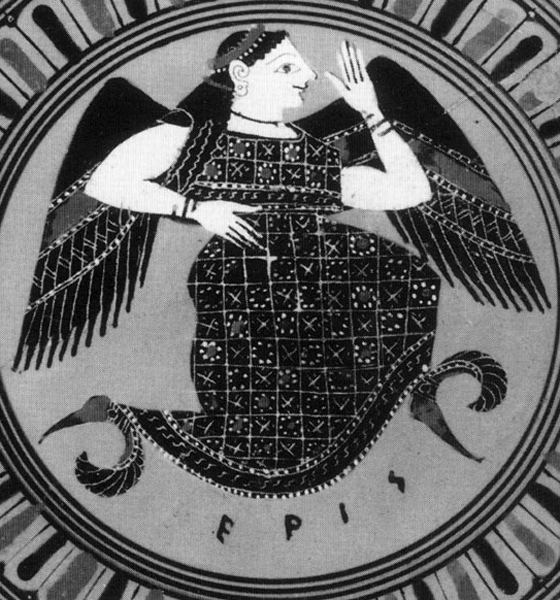
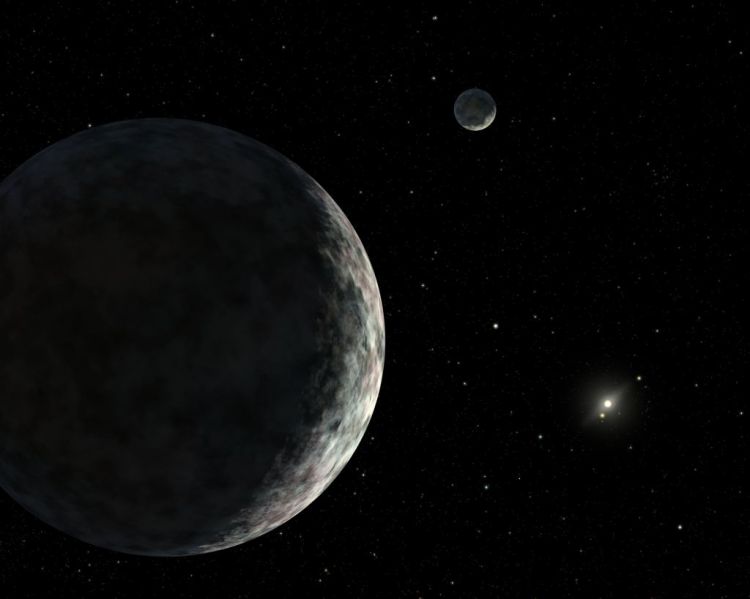
The removal of Pluto as a planet was an emotional blow to anyone with a heart. It was a devastating betrayal leaving many asking questions that no one wanted to hear the answers to. While there were many reasons behind Pluto’s status change, the ultimate culprit is the dwarf planet Eris. Eris was discovered in 2003 as another object orbiting the Sun. While of comparable size to Pluto, it orbits at a much greater distance through the Kuiper Belt. The similarities between Eris and Pluto forced scientists to confront Pluto’s issues that they were previously able to ignore, or risk including Eris and other similar dwarf planets or trans-Neptunian objects as planets in the Solar System.
Not too much is actually known about Eris yet. We can guess that it is structured relatively similar to Pluto, and it does have some atmosphere in the parts of its orbit that it is warm enough for the atmosphere to exist. Interestingly, it was named after Eris the Greek goddess of discord, a fitting name because it caused disagreement about the status of Pluto. In addition, its one moon is named Dysnomia, Eris’s demon daughter. While the problems with Pluto’s planetary status were known before Eris, the discovery of this new dwarf planet was the catalyst leading to Pluto’s ultimate demise.
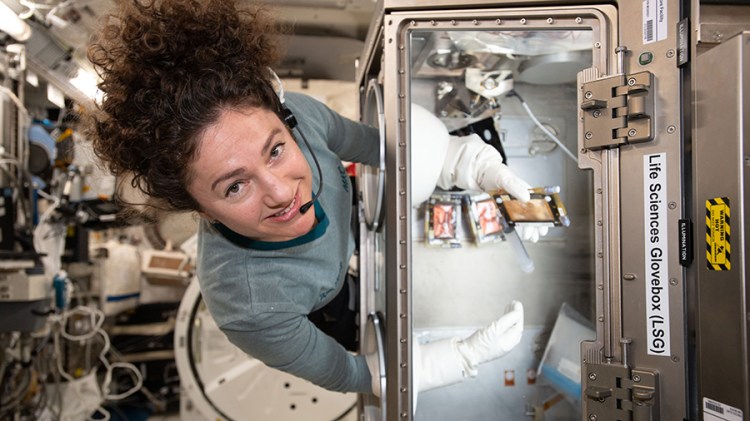
With a growing distrust in both science and the government (something I discussed in one of my earlier blog posts about the Flat Earth Movement), NASA is one government agency that comes under a lot of fire these days. With many in politics hoping to slash the NASA budget or cut the agency entirely, it is crucial for everyone to talk about why NASA is so important. NASA’s impacts can be divided into two main categories. The first are the concrete impacts. These are the projects that directly help our world. While many see NASA only for landing men on the moon, exploring mars, or sending spaceships deep into space, much of what they do are projects that benefit our society directly in some way. You can check out some of their current projects here. The second impact is the far more abstract idea of exploration. In the 60’s we put men on the moon, and this century we have reached other planets. We swim deep into the ocean and travel to places we have never been before. NASA is at the forefront of human exploration to a much larger degree. Its important for many reasons, both abstract and concrete, to continue funding and believing in the work that NASA does.
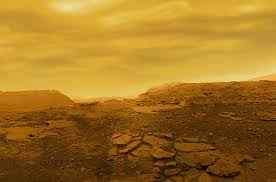
For years, the idea of colonizing another planet has fascinated the world (and with our climate crisis, become a very topical issue). After the moon, there are two obvious options, Mars and Venus. Obviously, we have directed our efforts towards Mars, but why not Venus? Venus is more comparable to the Earth in size and internal makeup, and the two are nearly the same distance from the Earth at their closest points. The problem is that Venus is nowhere close to inhabitable. Even machines can’t make it, as the few spacecrafts that have landed on its surface survive a few hours at most. So how long would humans last?The first threat would be Venus’ atmosphere. Comprised of 96% carbon dioxide, and only trace amounts of oxygen, we wouldn’t be able to breathe without assistance. Coupled with that, the air pressure on Venus is roughly 1352 psi, something far beyond what human bodies are built to withstand (as a reference, this is 92 times stronger than the pressure of Earth’s atmosphere, and the world record deepest scuba dive without a pressure suit experienced roughly 450 psi). Finally, there is the temperature. Due to its high level of carbon dioxide, a greenhouse gas, the atmosphere of Venus traps heat, making it the hottest planet, even surpassing Mercury. Venus’s average daily temperature is an astounding 870° Fahrenheit. Without even touching on the long term challenges of colonizing Venus (such as volcanic activity), we would not have enough time to die from hunger or thirst which would make up the next couple challenges in colonizing the planet. Its current properties make Venus a deadly venture for any person or object foolish enough to land on its surface.

While believers in a Flat Earth have always existed (even after it became widely understood that the Earth is a sphere), the number of “Flat Earthers” has grown (and continues to grow) at alarming rates. So how is a fact that has been proven thousands of different ways over a few thousand years rejected by roughly 6% of the global population. This movement is a prominent example of how we need to better understand and communicate the “Nature of Science.” First, the goals of science must be understood. A huge part of the Flat Earth movement is the idea of a government conspiracy using lies and “fake science” to fool its citizens. In reality, science is an objective process meant to discover truth. The scientific laws used to show the Earth is round have no political agenda nor are they subjective thoughts of a few individuals. Second, we must look at how the Flat Earth movement has incorrectly employed the Scientific method. Scientific studies often give results different from what you expect, but these results are still valid and important. Many Flat Earthers who set out to prove the flat nature of the Earth, however, have already decided what the outcome of their experiments should look like, and pick and choose the data that best supports their hypothesis of a Flat Earth. In other words, rather than conducting an experiment and letting the data lead them to a conclusion, they conduct an experiment with a conclusion in mind, and ignore any evidence that might prove otherwise. The Nature of Science is admitting that we may be wrong when we discover a new, more comprehensive way of explaining our observations. Understanding this nature, and how to properly use science, is crucial for our society to reestablish our trust in the scientific process.
In the documentary Behind the Curve, Tim Urban gives an excellent metaphor to understand the nature of science. I highly recommend this documentary to everyone, especially those interested in Flat Earth theories and the Flat Earth movement (it is available on Netflix).
(Urban’s metaphor, along with an actual experiment done by a Flat Earther occurs at 47:18 if you are interested in just that part).
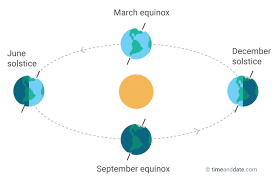
The winter and summer solstices occur as a result of the Earth’s tilt. The summer solstice occurs for a hemisphere when it is facing most directly towards the sun, and this marks the longest time of sunlight for that hemisphere. The winter solstice, is the exact opposite occurrence, resulting in the least amount of time of sunlight in a day. The equinoxes, however, occur when the axis is not tilted towards or away from the sun, and thus no hemisphere gets any more light than the other. This also results in there being an even amount of light and dark on the equinoxes.
The most fascinating aspects about the equinoxes (and solstices too, although I don’t talk about it) to me is their significance that we can see they had on civilizations throughout history. Despite lacking the technology that we have, many early civilizations knew what equinoxes were, and when they would occur. This has resulted in some amazing monuments and mysteries left over into our age. The famous Mayan pyramid in Chichen Itza, Mexico was constructed to cast a serpent shadow on the equinox. Of course, another famous site is Stonehenge. This mystery, although little is known about its history, can be used to predict both equinoxes and solstices. Other examples from ancient civilizations around the world showed that many early people knew about and understood equinoxes and solstices. These are just some of the first steps in our history of attempting to understand the world around us. This ability to understand something far beyond the technological capabilities of the day is yet another example of why we as the human race continue to push the limits of our knowledge and explore the universe in which we live.

This is an example post, originally published as part of Blogging University. Enroll in one of our ten programs, and start your blog right.
You’re going to publish a post today. Don’t worry about how your blog looks. Don’t worry if you haven’t given it a name yet, or you’re feeling overwhelmed. Just click the “New Post” button, and tell us why you’re here.
Why do this?
The post can be short or long, a personal intro to your life or a bloggy mission statement, a manifesto for the future or a simple outline of your the types of things you hope to publish.
To help you get started, here are a few questions:
You’re not locked into any of this; one of the wonderful things about blogs is how they constantly evolve as we learn, grow, and interact with one another — but it’s good to know where and why you started, and articulating your goals may just give you a few other post ideas.
Can’t think how to get started? Just write the first thing that pops into your head. Anne Lamott, author of a book on writing we love, says that you need to give yourself permission to write a “crappy first draft”. Anne makes a great point — just start writing, and worry about editing it later.
When you’re ready to publish, give your post three to five tags that describe your blog’s focus — writing, photography, fiction, parenting, food, cars, movies, sports, whatever. These tags will help others who care about your topics find you in the Reader. Make sure one of the tags is “zerotohero,” so other new bloggers can find you, too.


 Avi Ghitterman

You must be logged in to post a comment.